


Flatback earrings are one of the smartest choices for anyone who wants an earring that feels as good as it looks. They sit close to the ear, create less pressure than a traditional butterfly back, and work especially well in piercings where bulky backs can feel awkward fast. That includes second holes, stacked lobes, and cartilage placements like the helix or tragus.
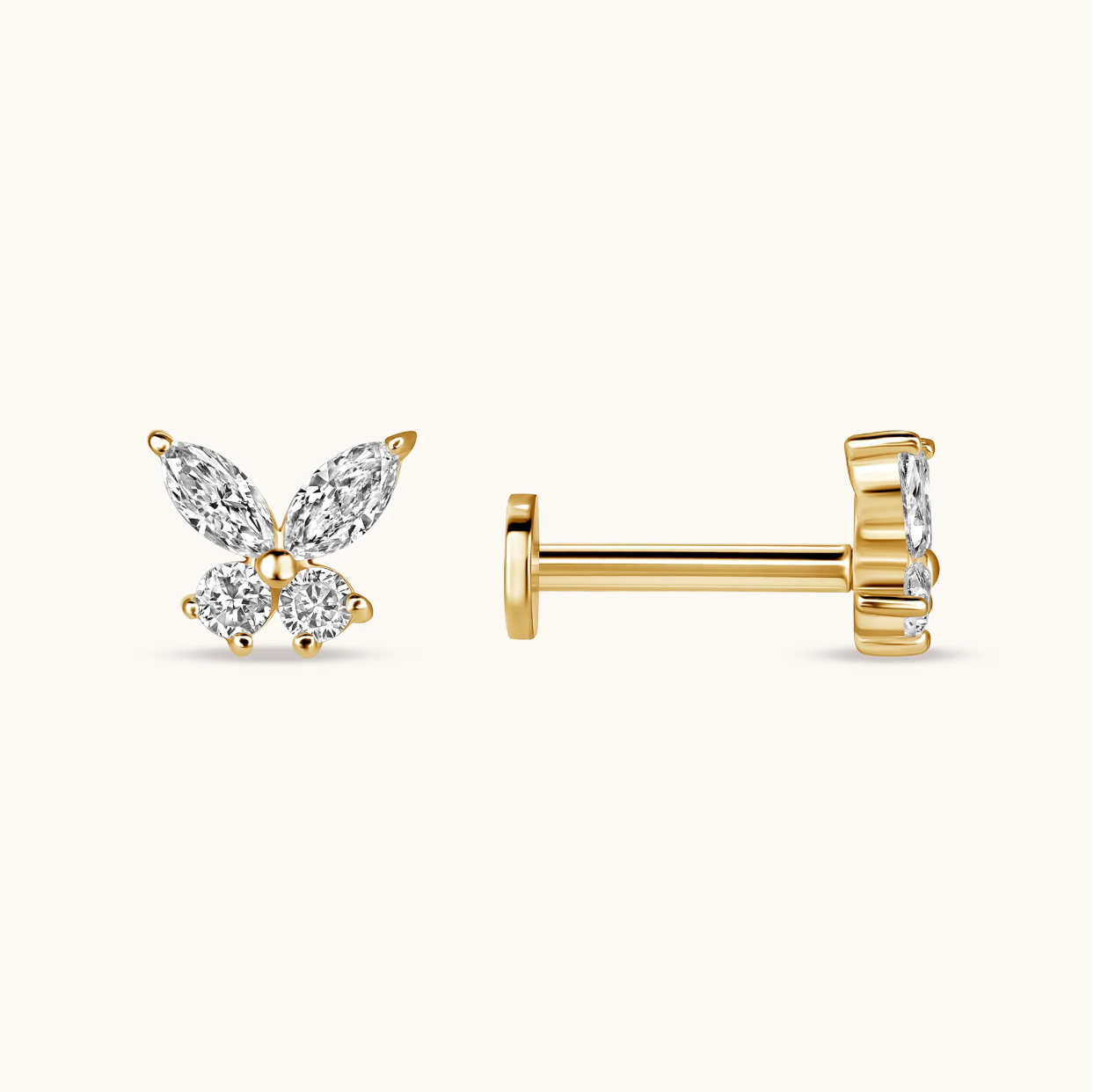
A flatback earring has a smooth disc on the back instead of a butterfly clutch. That disc rests more evenly against the skin, which is why many people find flatbacks easier to wear for long stretches. Happy Jewelers describes its flat back studs as a low-profile option designed for everyday comfort, and its collection notes that these styles are suitable for cartilage, helix, tragus, and lobe piercings.
In piercing settings, you may also see them described as labret studs. The wording sounds more technical than it is. A decorative front sits on one side of the ear, and a straight post pairs with a flat disc back.
Why People Wear Them
Comfort for Everyday Wear
Comfort is the biggest reason people switch. A butterfly back can press into the skin, catch on hair, or poke you when you lie on your side. A flatback reduces that because the back is smooth and broad rather than pinched. That makes a real difference for people who wear earrings all day, sleep in certain pairs, or like a close, clean ear stack.
The flat back styles are designed for long-term wear and comfortable daily use, though removing fine jewelry for heavy activity can still help protect the piece.
A More Secure Fit
Security matters too! Some flatbacks use a threaded front that twists into the post. Others use a threadless pin fit. The Association of Professional Piercers explains that internally threaded jewelry keeps the section that passes through the piercing smooth, while threadless jewelry uses a press fit connection with no screw threads. Both can work well.
If you want a style that feels more locked in once tightened, threaded may appeal more. If you plan to change jewelry often, threadless can feel simpler after a little practice.
Good for Lobes, Cartilage, and Ear Stacks
Flatback earrings are useful in more than one part of the ear. Lobes are the easiest starting point, especially for second and third piercings, where space can get crowded. They also make sense in cartilage placements, where the ear has less give and pressure points become obvious quickly.
Jewelers list cartilage, helix, tragus, and lobe piercings as natural uses for its flat back studs.
Comfort Still Depends on Fit and Materials
That said, flatbacks can improve comfort, but the jewelry style itself doesn’t remove normal piercing risks. Medical literature links ear piercing to nickel sensitivity, and reviews of ear piercing complications note issues such as embedded earrings, keloids, hypertrophic scarring, and cutaneous hypersensitivity.
Flatbacks can improve comfort, but correct sizing, safe materials, and clean aftercare still matter just as much.
How to Choose the Right Pair
Check Material, Fit, and Backing Style
If your ears are sensitive, material should come before shape. The Association of Professional Piercers recommends implant-certified titanium for people concerned about nickel sensitivity and states that gold is appropriate for initial piercings when it is 14K or higher, nickel-free, and alloyed for biocompatibility. That guidance is useful even if your piercing is already healed.
Happy Jewelers' flat back styles are crafted in solid 14K gold, which is a strong fit for shoppers who want fine jewelry rather than fashion jewelry. If you love diamond detail, the collection also includes lab-grown diamond options that keep the look polished and easy to stack.
Pay Attention to Post Size and Fit
Many buyers focus on the visible top and ignore the post. That is a mistake. The Association of Professional Piercers warns that jewelry that is too tight can increase swelling, embedding, and irritation, while jewelry that is too loose can catch and move around more than it should.
One Happy Jewelers example, the Moon Flat Back Single Stud Earring, lists an 18G gauge, 6.50 mm post length, 0.80 mm thread size, and 3.00 mm flat back disc. Those numbers will not be right for every ear, but they show why checking measurements matters before you buy.
Choose a Style That Fits Your Ear Stack
If you want a small everyday accent, a single gold or diamond flatback in a second lobe or helix usually feels refined without looking overdone. If you are building an ear stack, look at pieces that mix easily with classic studs, huggies, or items from the broader earrings collection.
Compare Backing Styles Before You Buy
If you are still comparing earring backs, Happy Jewelers also has a helpful guide on pushback vs screwback vs flatback earrings. It breaks down comfort, security, and daily use in plain language.
How to Put Them in and Care for Them
How you put these earrings in depends on the design. Insert the post through the back of the piercing, hold the decorative front in place, and twist until secure. If you are new to flatbacks, give yourself time in front of a mirror. The motion feels unfamiliar at first, especially in cartilage.
After that, keep the area clean and hands off as much as possible. Dermatologists advise leaving jewelry in a new piercing for six weeks or more, washing with a mild fragrance-free cleanser and water, and avoiding hydrogen peroxide or antibacterial soaps that can damage healing skin.
Final Thoughts
The best flatback earrings feel easy once they are in. They should sit close, stay secure, and suit the piercing you already have instead of forcing a fit that only looks good in a photo. Check the metal, confirm the gauge and post length, and buy with your real routine in mind.
If you want a polished place to start, explore the Happy Jewelers flat back stud earrings and pick a style that works on its own or layers naturally with the rest of your ear stack today!
Share:
Gold Jewelry Education: About, Care, and Buying Tips
How to Insure Your Engagement Ring