

The question "What hand does an engagement ring go on?" is one of the most common queries for anyone planning a proposal or newly engaged. The tradition of wearing an engagement ring is not just considered a personal choice but a practice that carries deep cultural and historical significance.
This article explores the origins, customs, and personal choices surrounding engagement ring placement, connecting you to a rich cultural heritage and helping you make the choice that's perfect for you.
The Origin of the Engagement Ring Tradition
The engagement ring, a symbol of eternal love and commitment, has a rich history that dates back thousands of years. The ancient Egyptians, often credited with the practice, believed that circles symbolized eternity. They also thought that a special vein, known as the 'vena amoris' or 'vein of love,' ran directly from the fourth finger of the left hand to the heart. This romantic notion is why, in many Western cultures, the engagement ring is traditionally worn on the left hand’s ring finger.
The Romans later adopted this tradition, and it has been carried forward, especially in countries influenced by Western customs. Over time, the engagement ring has become a cherished symbol of love, commitment, and the promise of marriage.
What Hand Does an Engagement Ring Go On in Western Countries?
In most Western countries, including the United States, Canada, the United Kingdom, Australia, and much of Western Europe, the answer to "What hand does an engagement ring go on?" is the left hand.
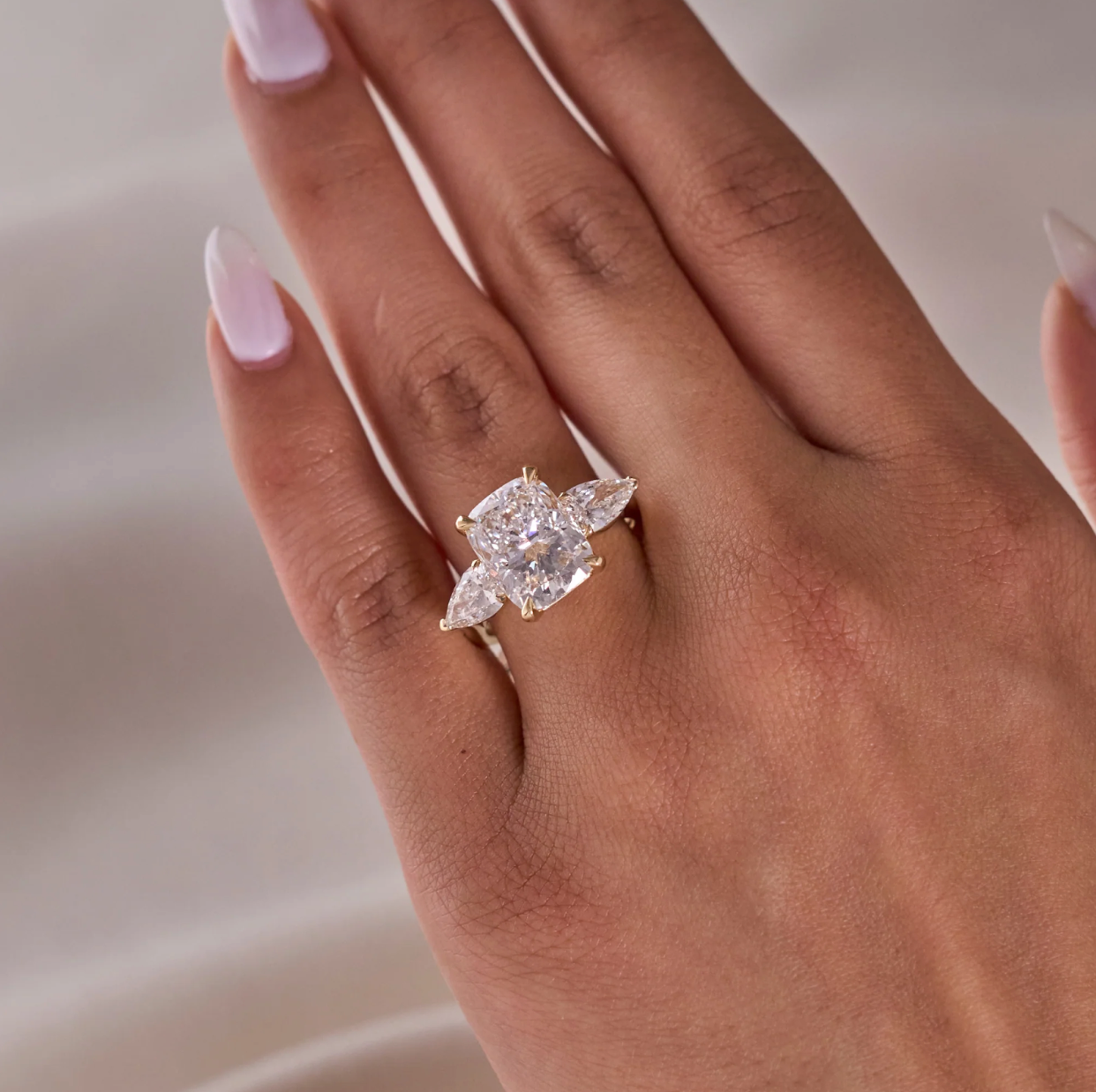
Specifically, it is placed on the fourth finger, commonly referred to as the ring finger. This tradition is so deeply rooted that many people never question it. For countless couples, sliding the ring onto the left hand during a proposal is a meaningful ritual.
After the wedding ceremony, some wear both the engagement ring and wedding band together on the same finger, usually stacking the wedding band closer to the heart.
Why the Left Hand?
The belief in the 'vein of love' connecting the fourth finger to the heart is more myth than medical fact, but it’s a story that has stuck. This myth, along with the left hand being considered less dominant for most people, has contributed to the tradition of wearing the engagement ring on the left hand.
Wearing the engagement ring on the left hand has become a visual sign of engagement or marriage in Western societies. When someone spots a ring on that finger, it’s immediately recognized as a symbol of taken status.
What Hand Does an Engagement Ring Go On in Other Cultures?
While the left hand is the standard in much of the world, it’s not the only way. Many countries and cultures have their own traditions regarding which hand an engagement ring is worn on.
Central and Eastern Europe
In countries such as Russia, Poland, and Greece, the right hand is the traditional choice for both engagement and wedding rings. This custom dates back to Orthodox Christian practices and is still widely observed today. Similarly, in India, it’s not uncommon for engagement and wedding rings to be worn on the right hand, as the left is sometimes considered less auspicious.
Germany, Spain, and Scandinavian Countries
In Germany and Spain, engagement rings are often worn on the left hand when a couple is engaged and then moved to the right hand after the wedding. In Norway, Denmark, and other Scandinavian countries, the right hand is also favored for both engagement and wedding rings.
Jewish and Same-Sex Wedding Traditions
In Jewish wedding ceremonies, the ring is often placed on the right hand's index finger during the ceremony and then transferred to the left hand afterward. Many same-sex couples also choose their traditions, sometimes opting for right-hand rings as a personal or symbolic choice.
Modern Trends: Personal Choice Matters
Today, the answer is increasingly personal. Many couples are breaking with tradition and wearing their rings in a way that feels most meaningful to them. This modern trend emphasizes the empowerment of personal choice, allowing you to make decisions based on your work, handedness, comfort, or even honor both partners' backgrounds in multicultural relationships.
For those in multicultural relationships, it’s common to honor both partners' backgrounds—sometimes even switching hands after the wedding or wearing the engagement ring on one hand and the wedding ring on the other.
Stacking: How to Wear Engagement and Wedding Rings
A popular question following which hand the engagement ring goes on is how to stack engagement and wedding rings. The wedding band is traditionally worn closest to the heart, which means it’s placed on the finger first, with the engagement ring stacked above it. This stacking method symbolizes that the wedding band, representing the marriage, is closest to your heart.
Others choose to wear rings on separate fingers, alternate hands, or even on different hands on different days. With the rise of eternity bands and anniversary rings, stacking has become an expressive art form limited only by personal taste.
Practical Considerations
While tradition provides guidance, there are practical reasons you might choose one hand over the other for your engagement ring. If you are left-handed, wear your ring on your right hand to prevent unnecessary scratches or damage.
Some people whose work involves frequent use of their hands, such as healthcare workers or artists, may find it safer or more comfortable to keep rings on their non-dominant hands or even on a chain around the neck when needed.
Travel and safety are also factors; in some cases, people wear less conspicuous bands or swap hands to avoid attention when traveling.
Symbolism and Sentimentality
No matter which hand you choose, what matters most is the sentiment and promise the ring represents. The engagement ring is not just a piece of jewelry but a symbol of love and commitment. Some couples have created new traditions, such as wearing matching rings on the same hand or switching hands to symbolize new chapters in their relationship. Ultimately, the actual value of the engagement ring is the love and commitment it signifies, not the finger on which it is worn.
Conclusion
The question of what hand the engagement ring goes on has a simple answer for some and a more complex one for others. While tradition suggests the left hand's ring finger, global customs and personal preferences mean there’s no single "right" way.
Whether you follow the practices of your culture, start your tradition, or blend the two, what matters most is the meaning behind the ring. At Happy Jewelers, we celebrate your love story—however you choose to wear it.
If you’re searching for the perfect engagement ring or seeking expert advice on fit and style, browse our collection or contact our team for guidance. Wear your ring with pride, knowing it represents your unique journey together.
Share:
How to Write a Maid of Honor Speech
Cubic Zirconia vs. Diamond