

Choosing a diamond shape can express your personality, helping you feel confident and unique. Shape influences sparkle, perceived size, style, and even the level of protection the setting should provide.
The shape refers to a diamond’s outline when viewed from above, while cut style refers to the arrangement of facets that affects how light performs inside the stone. That distinction matters because two diamonds can look similar in outline but very different in brilliance and overall personality.
Knowing the right shape can make you feel more confident and in control when shopping for an engagement ring or planning a custom design.
This guide breaks down the most popular diamond shapes, who they tend to suit, and what to think about before you commit!
Diamond Shape vs. Diamond Cut

Many shoppers use shape and cut as if they mean the same thing, but they do not. Shape is the face-up outline, such as round, oval, square, or pear. Cut style is the faceting pattern, such as a brilliant cut or a step cut, which affects sparkle, fire, and how light moves across the diamond.
Round brilliant diamonds are known for maximum sparkle, while shapes such as emerald and Asscher rely more on long, clean flashes of light than pinfire brilliance. Knowing that difference helps set realistic expectations before you compare stones that look different in person.
Why Shape Matters So Much

Shape affects more than appearance. It changes how large a diamond appears face-up, how well it flatters the finger, and how securely the stone needs to be set.
Elongated shapes such as ovals, pears, marquises, and emeralds can make fingers appear longer and can also look larger than some other shapes of the same carat weight.
Another practical point is performance and grading. The round brilliant is the only shape with an official cut grade, while elongated shapes such as oval, pear, and marquise can appear larger face-up at the same carat weight. That makes shape a visual and value decision.
Happy Jewelers’ finger-shape guide also highlights the best diamond shapes for each finger contour. That is why shape should be one of your first decisions, not one of your last.
Round Diamonds
Round remains the classic benchmark because it delivers the most consistent brilliance and broad appeal. The round is the most popular diamond shape, and it continues to dominate among shoppers who want timelessness, high sparkle, and flexibility across solitaire, halo, pavé, and three-stone settings. A well-cut round is usually the safest choice if you want maximum brightness and a style that never feels dated.
The tradeoff is usually price. Round diamonds often cost more than fancy shapes because more rough diamond is lost during cutting. On average, rounds can cost about 20-30% more than ovals or cushions of the same quality and carat weight. If sparkle is your number one priority, that premium can feel worthwhile.
Oval, Pear, and Marquise
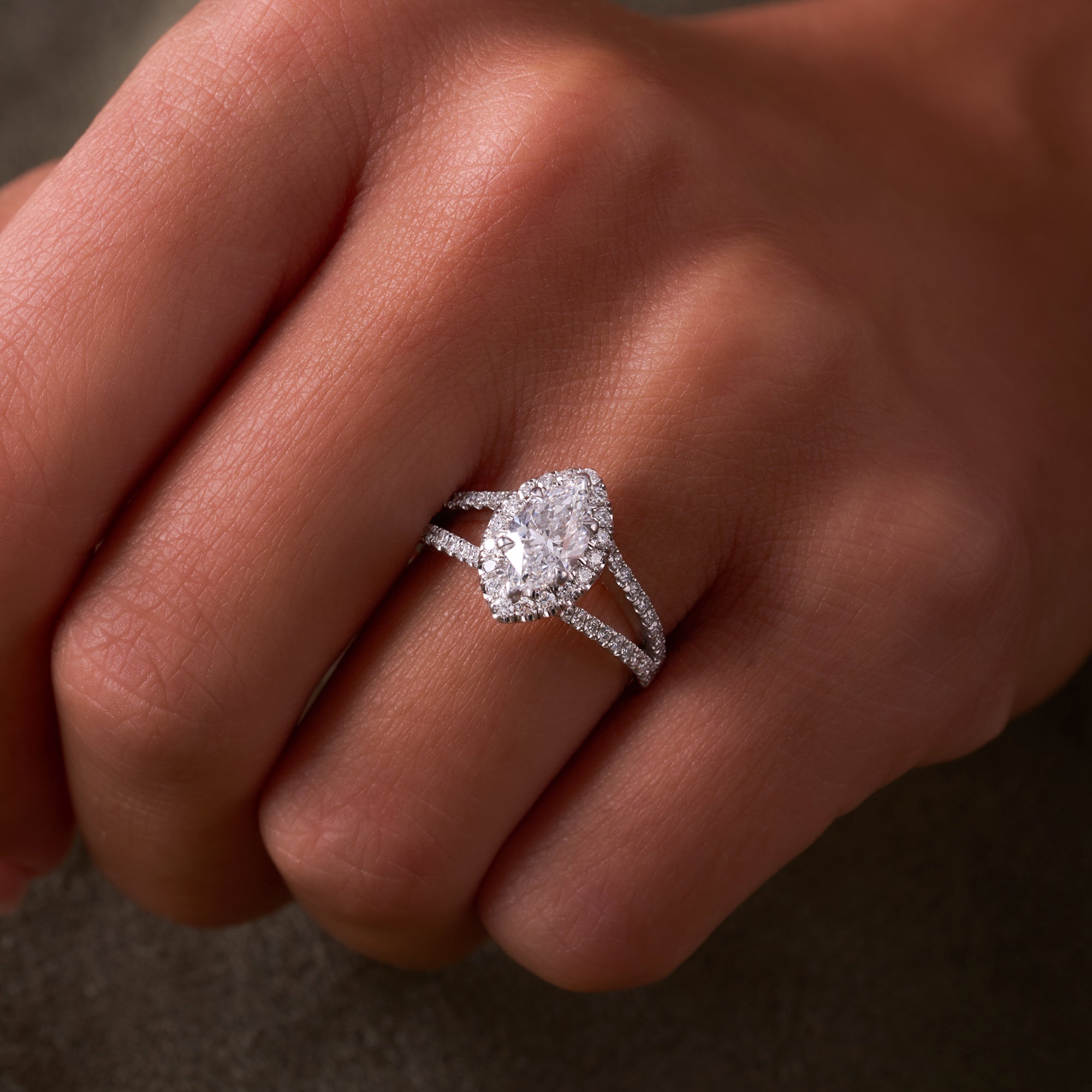
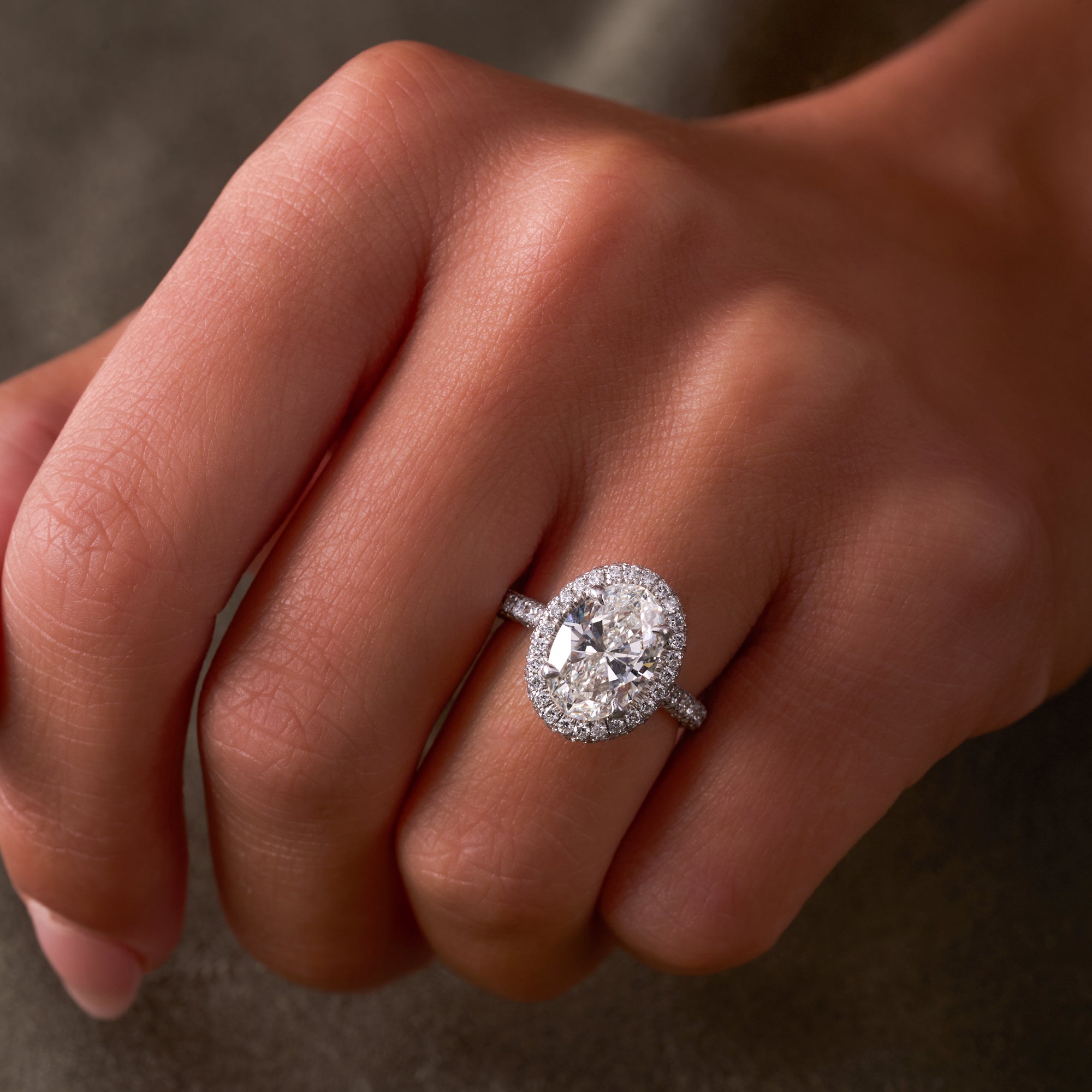
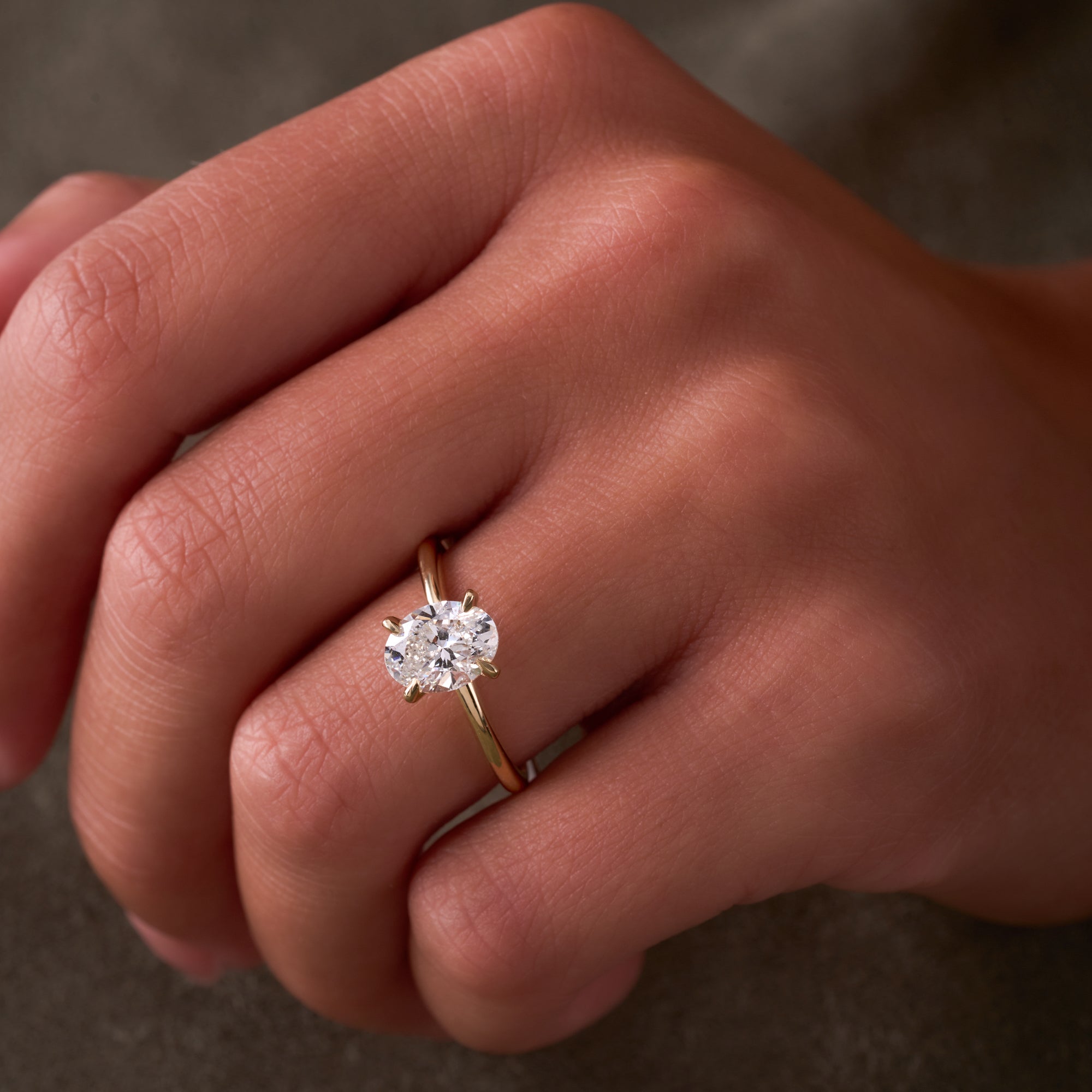
These elongated brilliant-style shapes are popular for shoppers who want a flattering silhouette with strong sparkle. Ovals offer much of the brightness people love in round diamonds, but with a softer, lengthening effect on the finger.
Ovals are often more affordable than round brilliants of the same carat weight while still delivering lively brilliance. Pear shapes feel slightly more directional and dramatic, while marquise shapes create an especially elongated appearance.
All three can exhibit a bow-tie effect, a darker, shadowy area that stretches across the center of the diamond and can vary in intensity depending on the individual stone. To check for a bow tie, view the diamond face-up from different angles under various lighting conditions.
If shopping online, request high-quality videos or images of the actual diamond, or try to see the diamond in person, to spot any visible bow-tie effect before making your decision. Pear and marquise shapes also have pointed tips, so protective prongs or a bezel-style approach become especially important.
These shapes are ideal for shoppers who want a diamond that looks graceful and visually longer on the hand. They also work well when you want a strong sparkle without defaulting to a round stone.
Emerald and Asscher
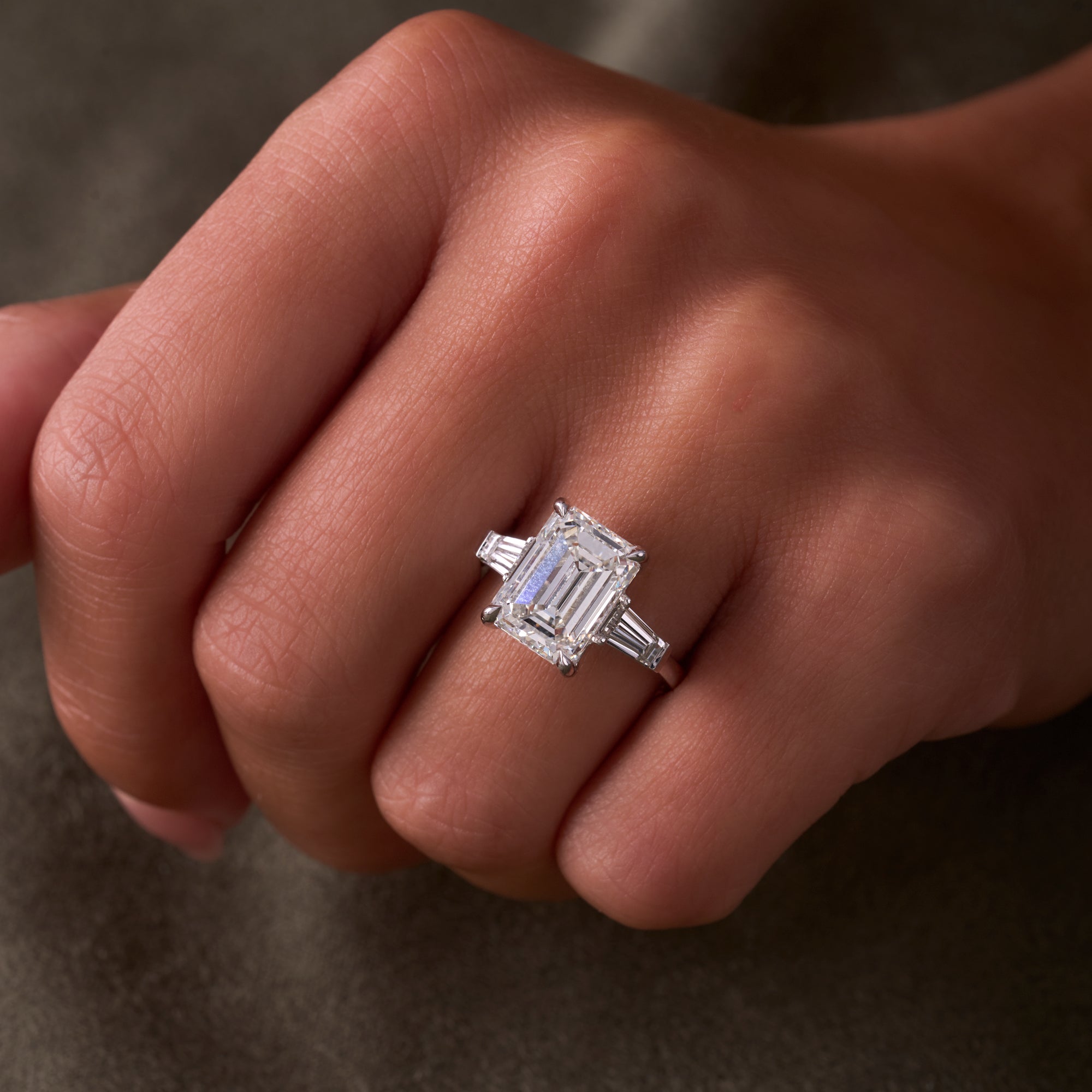
Emerald and Asscher are step-cut shapes, prized less for glittery sparkle and more for crisp, hall-of-mirrors flashes. Emerald is rectangular and elegant, while Asscher is more square with cropped corners and a vintage feel. They attract shoppers who love clean lines, symmetry, and a refined look that feels understated rather than flashy.
Because step cuts have larger, more open facets, inclusions and body color can be easier to notice than in brilliant-cut shapes. That makes clarity and overall stone quality more visible to the eye. To help ensure your diamond appears flawless to the naked eye, it is recommended to choose a minimum clarity grade of VS2 or better for step-cut diamonds like emeralds and Asschers.
On the other hand, these shapes reward shoppers who appreciate structure, sophistication, and a sleek profile. If that is your style, emerald engagement rings are a strong place to begin.
Cushion, Princess, and Radiant
These are the go-to shapes for shoppers who want something square or rectangular without giving up too much brilliance.
Cushion cuts feel soft and romantic, with rounded corners and a balanced look that works beautifully in both vintage-inspired and modern settings. Princess cuts feel sharper and more architectural.
Princess cuts can appear slightly smaller face up than some other square shapes because more weight sits deeper in the stone, but they are often more affordable per carat than round brilliants.
Radiant cuts combine a rectangular or square outline with brilliant faceting, making them a good middle ground between crisp geometry and lively sparkle.
Choose cushion for softness, princess for clean, modern lines, and radiant for bright sparkle with a more tailored outline.
Heart Shapes
Heart-shaped diamonds are the most overtly romantic option. They are distinctive, sentimental, and best for shoppers who want their ring to make a clear style statement. A beautiful heart shape should look symmetrical, with balanced lobes and a point.
How to Choose the Right Diamond Shape

When choosing a diamond shape, it is important to assess how it appears on your hand in person. To facilitate this decision, consider following a step-by-step checklist:
- Photograph your hand for reference
- Try on different diamond shapes at similar carat weights to compare their visual impact.
- Evaluate both comfort and visual appeal under various lighting conditions, such as natural daylight and indoor settings.
- Solicit feedback or review images alongside your preferences.
This methodical approach increases the likelihood of selecting a shape that aligns with your personal style, ensuring it feels and looks appropriate for you in everyday contexts and supports a confident, well-informed decision.
Final Thoughts
The best diamond shape is not the one everyone else chooses. It is the one that matches your taste, flatters your hand, and feels the way you want the ring to feel every day.
Round is timeless, oval is elegant, pear is expressive, marquise is dramatic, emerald is sleek, Asscher is architectural, cushion is romantic, princess is modern, radiant is bright, and heart is unmistakably sentimental.
To keep exploring, start with all engagement rings, compare shape-specific styles at Happy Jewelers!




Share:
How to Create the Perfect Engagement Ring Based On Your Budget?
Does White Gold Change Color?