

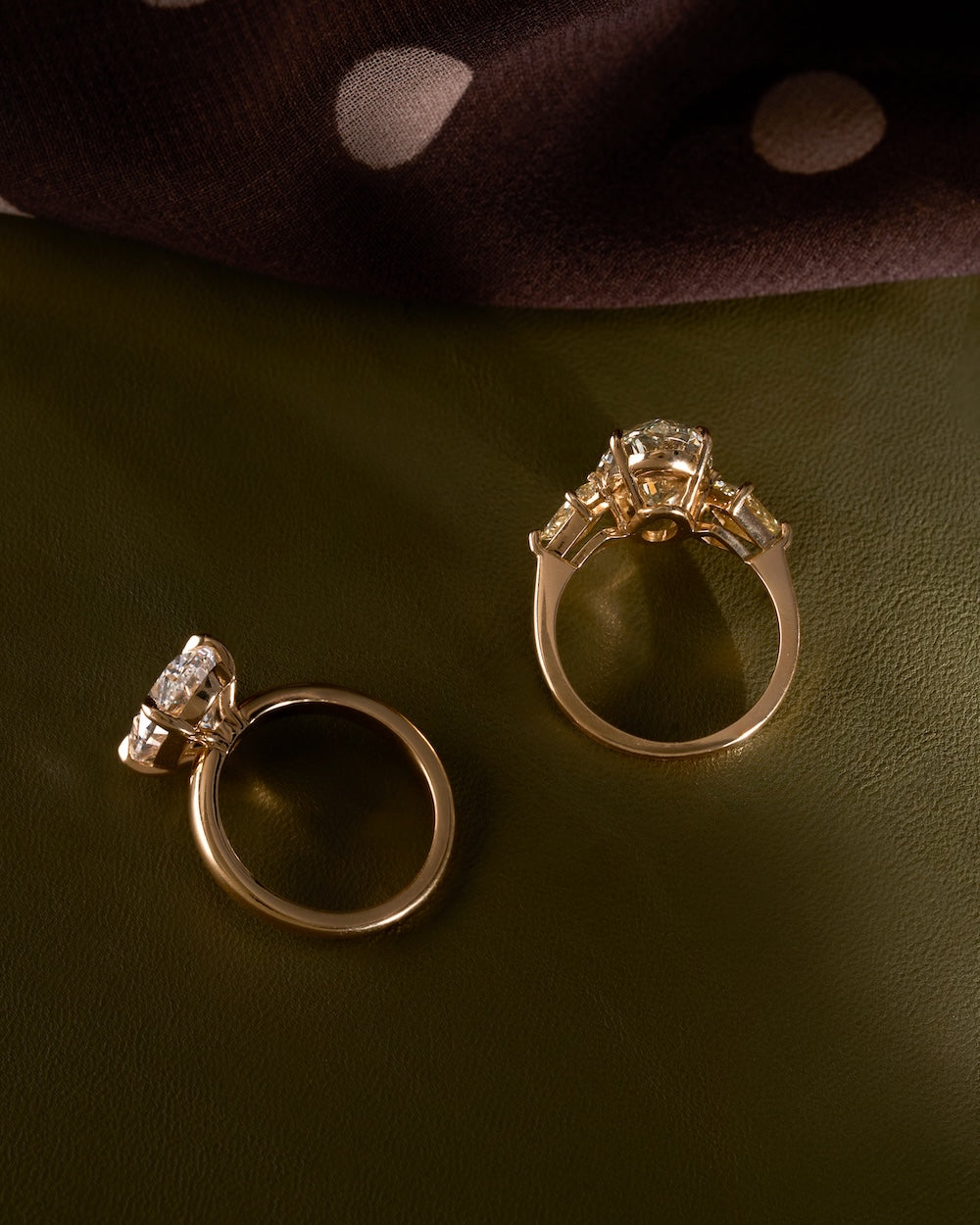
 A cathedral engagement ring has metal shoulders that sweep upward from the band toward the center stone, resembling the arches of a cathedral. This framework gives the ring its distinctive side profile and draws attention to the gemstone. The name describes the mounting's architecture. You can choose the gemstone's shape, the metal, and the decorative details independently.
How a Cathedral Setting Works
The shank is the band around your finger. Its shoulders rise toward the head, the structure holding the center stone. Prongs or a bezel secure the gemstone; the cathedral arches surround or support that central assembly. Look at a side photograph to identify the rising shoulders. Height alone does not make a ring cathedral, and designs vary in how far they project above the finger.
Cathedral Versus Solitaire
A solitaire features a single gemstone, while cathedral refers to the surrounding metalwork. A ring can therefore be both a solitaire and a cathedral design. Cathedral construction also works with accent diamonds and multiple stones, so these terms should not be treated as competing categories.
Cathedral Versus Basket and Peg Head
A basket uses supporting rails beneath the gemstone and can be incorporated into a cathedral ring. A peg head attaches the stone's holder to the band at its base, without necessarily having rising shoulders. Compare the actual connections and craftsmanship rather than assuming one label guarantees superior strength.
Advantages and Everyday Tradeoffs
The elevated profile gives the center stone greater visual prominence. It does not increase carat weight or guarantee extra sparkle: cut quality, lighting, and cleanliness influence a diamond's appearance. Substantial shoulders can also create an appealing transition between a slim band and a larger gemstone.
When connected to the head, arches can add structural support. However, they do not shield every exposed edge or compensate for worn prongs. Gemological research distinguishes hardness from toughness: resistance to scratching does not mean resistance to breaking. Even diamonds can chip. Raised designs may catch on knitwear or gloves and receive knocks during everyday tasks.
Design Options and Suitable Center Stones
Plain metal shoulders emphasize clean lines. Pavé shoulders add small diamonds along the band, while a visible halo frames the center stone. A hidden halo sits beneath it, adding detail from side angles. Designs with three stones introduce flanking gems, and engraved or pierced metalwork can create a vintage appearance.
Round, oval, cushion, emerald, pear, and marquise shapes can all work in cathedral settings when the head is built for their dimensions. Pointed shapes need appropriate protection, often including V prongs over vulnerable tips. Judge the proportions together: heavy arches can overwhelm a small stone, while an exceptionally delicate mounting may be unsuitable for a large one.
Cathedral settings can also hold sapphires and other colored gemstones. However, the mounting does not make a fragile gem suitable for daily wear. Ask about toughness and treatments before choosing the stone; emeralds, for example, often require more cautious handling than diamonds.
Will a Wedding Band Sit Flush?
A cathedral design may leave space for a straight wedding band, but a seamless fit is never automatic. The underside of the basket, bridge, and any hidden halo must clear the neighboring band. The band's height matters as much as its width.
Try the engagement ring with your intended wedding band, then examine both from the side. Check for rubbing against prongs or exposed diamonds. If the structures collide, a contoured band may follow the setting more comfortably. A small intentional gap is another option.
How to Choose a Cathedral Engagement Ring?
Check Height and Comfort
Ask for the overall setting height in millimeters and photographs showing the ring on a hand. Try bending your fingers and reaching into a pocket. Consider gloves, work requirements, and whether the ring rotates. A lower cathedral profile may suit you better than a dramatic, tall version. Correct sizing helps stability, but an uncomfortable ring should not simply be tightened.
Compare Construction and Cost
Check shoulder thickness, smooth finishing, and the joints around the head. Prong tips should sit against the stone without visible gaps. Ask whether the ring can be resized, especially if diamonds extend around the shank. Yellow, white, and rose gold offer different colors; platinum provides another metal option. Confirm the actual alloy if you have metal sensitivities.
Cathedral construction has no universal price premium. Metal weight, fabrication, accent stones, and finishing affect the mounting's cost. The center stone's specifications can change the total substantially. Request separate prices for the stone and setting when comparing designs.
Verify Diamond Details
Confirm whether the center diamond is natural or laboratory-grown and review its grading report when available. Ask for written stone details, including weight, treatments, and special care requirements. Check that the paperwork describes the diamond you selected rather than relying on a general product photograph.
Plan for Future Stone Changes
A substantially larger replacement diamond may need a new head or an entirely new mounting. The existing arches can limit available space, particularly when they connect closely to the basket. Ask whether the design allows future changes before buying. A setting advertised as customizable before manufacture is not necessarily easy to alter once completed.
Caring for a Cathedral Ring
For suitable diamond jewelry, use warm water, mild dish soap, and a soft toothbrush. Gently clean beneath the stone and around the arches, rinse, and dry with a soft, lint-free cloth. Avoid toothpaste, bleach, and abrasive cleaners. Treated gems and delicate settings may need different care; ask before using ultrasonic equipment.
Remove the ring before lifting weights, gardening, or handling harsh chemicals. Arrange professional inspections as your jeweler recommends, particularly after a substantial knock. A loose stone, bent prong, or new snagging requires attention before further wear.
For a design tailored to your preferred proportions and wedding band, Browse Happy Jewelers' engagement rings to compare stone shapes and mounting styles.
Happy Shopping!
Share:
The Ultimate Guide to Ultrasonic Jewelry Cleaners