


If you're wondering how to clean a diamond ring, the safest answer begins at your kitchen sink. This guide walks you through step-by-step cleaning, how to avoid common cleaning mistakes, how to handle special or delicate settings, and when to book a pro inspection to keep your ring dazzling year after year.
How to Clean Your Diamond Ring at Home
-
Mix and Soak: Fill a small bowl with warm water and a drop or two of mild dish soap. Let the ring soak for 15–20 minutes to loosen lotions and oils. GIA endorses this gentle approach as the safest baseline.
-
Brush Lightly: Using a soft brush, sweep under the gallery, around prongs, and behind the diamond where residue collects. The American Gem Society (AGS) recommends soft-bristled brushes to avoid scratches.
-
Rinse Carefully: Rinse in a cup of clean water rather than under an open faucet, then pat dry with a lint-free cloth. It is explicitly advised to rinse in a container to avoid accidental loss.
-
Spot-Check: If haze remains, repeat the soak and brush. Stubborn film often hides beneath the stone or between pavé beads.
-
Finish and Store: Air-dry entirely and store separately so the diamond doesn't abrade other pieces. Experts also suggest a quick wipe after wear to remove lotions before storage. Gently dry your diamond ring with a lint-free soft fabric.
Tip: If your question is how to clean a diamond ring quickly before taking photos, a 5-minute soak and gentle brush will lift most residue without harsh chemicals.
What to Avoid
Avoid harsh chemicals and abrasives. Skip chlorine bleach, strong cleaners, and gritty pastes or toothpaste on diamond rings. Chlorine can pit or weaken gold alloys, and abrasives can scratch metal. Metals alloyed with gold in many settings can also be scratched by abrasives.
Say no to open drains and snag risks! Close the drain and use a bowl. GIA recommends container rinsing to prevent losing stones. Stop making assumptions about other gems. If your ring includes emerald, opal, pearl, turquoise, or other sensitive stones, stick to the mild soap-and-water routine and consult a jeweler before using machines or alcohol-based products.
Moreover, handle delicate settings with care. Antique pieces with worn prongs and tension settings, which hold the diamond in place by pressure from the shank, can be harmed by vigorous scrubbing. Use a gentle touch with a toothbrush.
Are Ultrasonic or Steam Cleaners Safe?
Ultrasonic machines shake loose dirt from hard-to-reach places and transmit energy into settings. However, specialists caution against using ultrasonics on certain gem types and fracture-filled or heavily included stones, as they can be risky.
When in doubt, ask a professional before using any device at home. Be extra careful if your diamond has had clarity treatments. Laser-drilled diamonds sometimes have channels or fillings that may trap debris or react poorly to aggressive cleaning.
Steam can be effective in trained hands, but heat and pressure are not suitable for every piece.
How Often Should I Clean and Inspect?
At home, a quick weekly wipe and a monthly soak keep everyday buildup in check. For professional care, industry guidance centers on regular inspections and cleanings. They advise an annual check and a professional cleaning about every six months, especially for pieces you wear daily.
If you’re near us, we’re happy to inspect prongs and settings and clean your ring in-store. Explore our made-to-order engagement rings if you’re considering an upgrade or a complementary wedding band.
Special Settings and Metal Notes
-
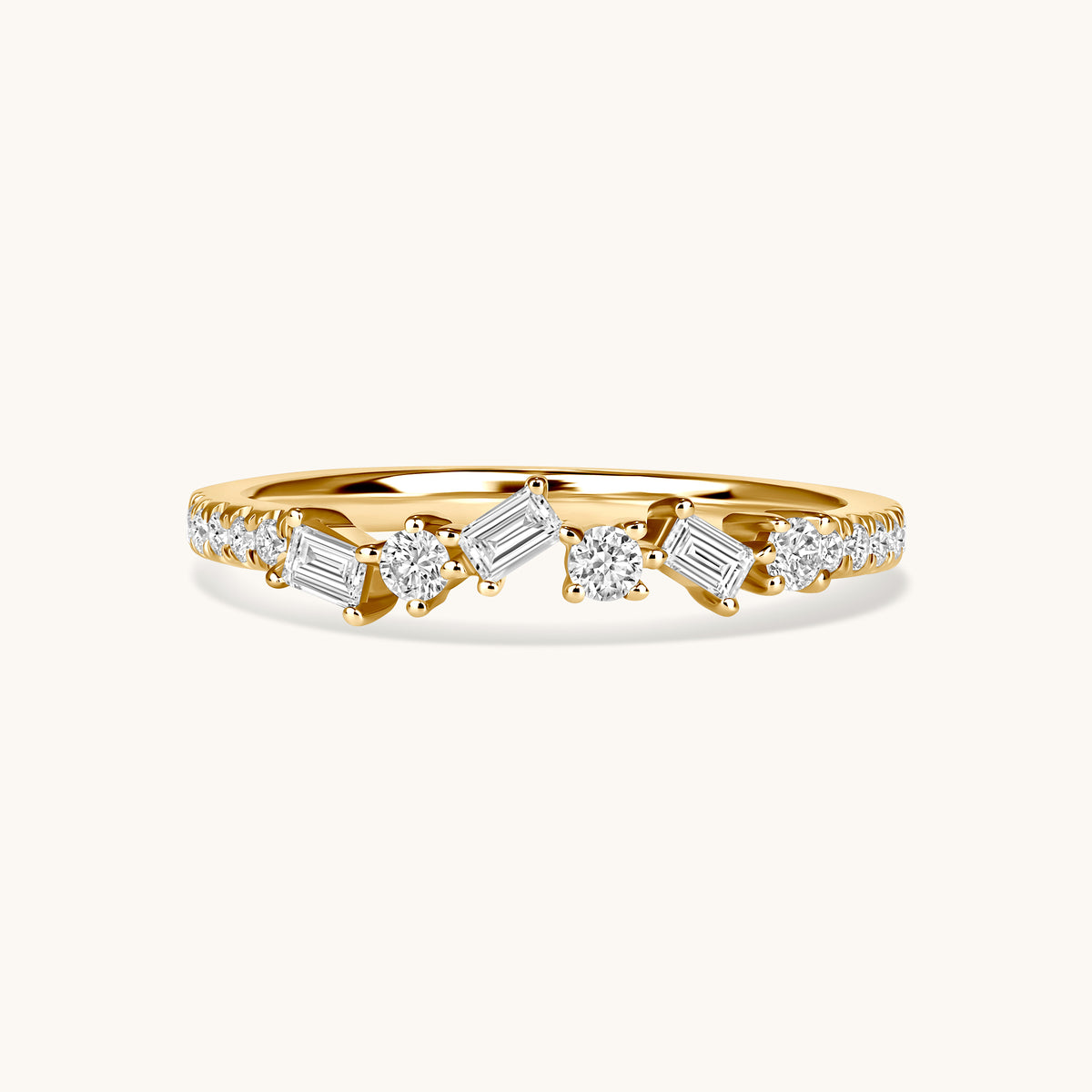
Micro-pavé and halos: Dirt hides between beads and under the center stone. Brush gently from multiple angles to avoid snagging threads. For frequent wearers, bring pavé rings for periodic professional cleaning so stones can be checked under magnification.
-
White gold: Many white gold rings are rhodium-plated for brightness. Cleaning won't harm the plating, but you can expect normal replating needs over time, depending on wear. Keep bleach away from all gold alloys.
-
Platinum: Naturally white and durable. Soap-and-water cleaning is ideal; professional polishing can restore luster if patina develops.
Troubleshooting Cloudy or Dull Stones
If the diamond still looks flat after cleaning, residue under the pavilion may be the culprit. Repeat the soak and gently angle the brush beneath the stone. Persistent cloudiness may also result from cosmetic products that re-deposit quickly or from tiny chips at facet edges.
In those cases, let a jeweler inspect the ring and refresh the finish. We emphasize gentle, frequent cleaning plus periodic professional checks to maintain brilliance.
FAQs
Can I wear my diamond ring while washing dishes or using hand sanitizer?
It’s best to remove your ring before dishwashing, as detergents can be harsh, and a wet ring may slip off your finger. Hand sanitizer (alcohol-based) won’t harm diamond or platinum, but repeated exposure can dull rhodium plating on white gold and is not ideal for porous/soft gems. When in doubt, take it off briefly or use gloves.
Can I use vinegar or baking soda to clean my diamond ring?
No. Vinegar’s acidity and baking soda’s abrasiveness can damage certain metals and vulnerable side stones.
Can I use a blow dryer or heat to speed up drying after cleaning?
Skip heat at all costs. It can affect the glues used in some settings and isn’t necessary. Pat dry with a lint-free cloth and let the ring air-dry fully before wearing.
Bottom Line
To keep the question of how to clean a diamond ring straightforward, it’s recommended to use warm water, mild dish soap, and a soft brush, then dry with a lint-free cloth. Avoid harsh chemicals, be cautious with machines, and lean on periodic professional inspections to keep prongs tight and brilliance high.
When you need expert help or a deep clean, you can visit Happy Jewelers or contact our team anytime for service options.



Share:
What Are Angel Numbers?
Can You Wear Gold and Silver Together?