


A dark speck can look enormous when a diamond fills your screen. Would you see it on your hand? If you’re comparing SI1 vs. SI2 diamonds, SI1 is the higher of the two Slightly Included grades. On the Gemological Institute of America (GIA) scale for natural diamonds, a trained grader can find inclusions easily in SI1 and very easily in SI2 at 10× magnification.
A single prominent inclusion can earn the lower grade. The neighboring grades on a report are VS2 (Very Slightly Included) above SI1 and I1 (Included) below SI2.
Understanding how inclusions affect a diamond’s appearance can help you decide whether paying more for an SI1 diamond is worth it.
What Determines the Clarity Grade
An inclusion is a feature within the diamond that may reach its surface. A blemish, such as a scratch, is confined to the surface. Graders consider the size, number, type, and location of these features. They also assess relief, the contrast between a feature and its surroundings. Against a bright facet, a dark crystal has higher relief than a pale crystal of similar size.
If you’re buying a vintage ring, ask whether its clarity grade comes from a laboratory report or a jeweler’s estimate. GIA requires the stone to be loose for its Diamond Grading Report because metal can hide part of a mounted diamond.
Check the report issuer if you’re shopping for a lab-grown diamond. The International Gemological Institute uses SI1 and SI2 for lab-grown stones. Since October 2025, GIA has used the overall ratings Premium and Standard for eligible colorless to near-colorless lab-grown diamonds. Those ratings combine several qualities, including color and cut. SI clarity falls below the minimum for either rating.
What Do Different Inclusions Look Like?
Crystals and Their Reflections
The table is the large, flat facet on top of a diamond. A crystal trapped beneath its center can be easier to spot than an identical crystal near the rim. What looks like a row of dark specks may be a single crystal mirrored in neighboring facets. A jeweler can locate their source under a microscope.
Clouds and Graining
A cloud is a cluster of tiny inclusions called pinpoints. Even through a loupe, it can be hard to pick out the individual specks. A small, localized cloud may leave the stone looking crisp, while a dense cloud extending across several facets can soften the boundary between bright and dark areas.
The term internal graining describes irregularities in a diamond’s crystal structure. Some appear as faint bands or reflective lines. If a line flashes into view as the jeweler tilts the stone, notice how far you can turn it before the line disappears.
How Shape and Setting Affect the View
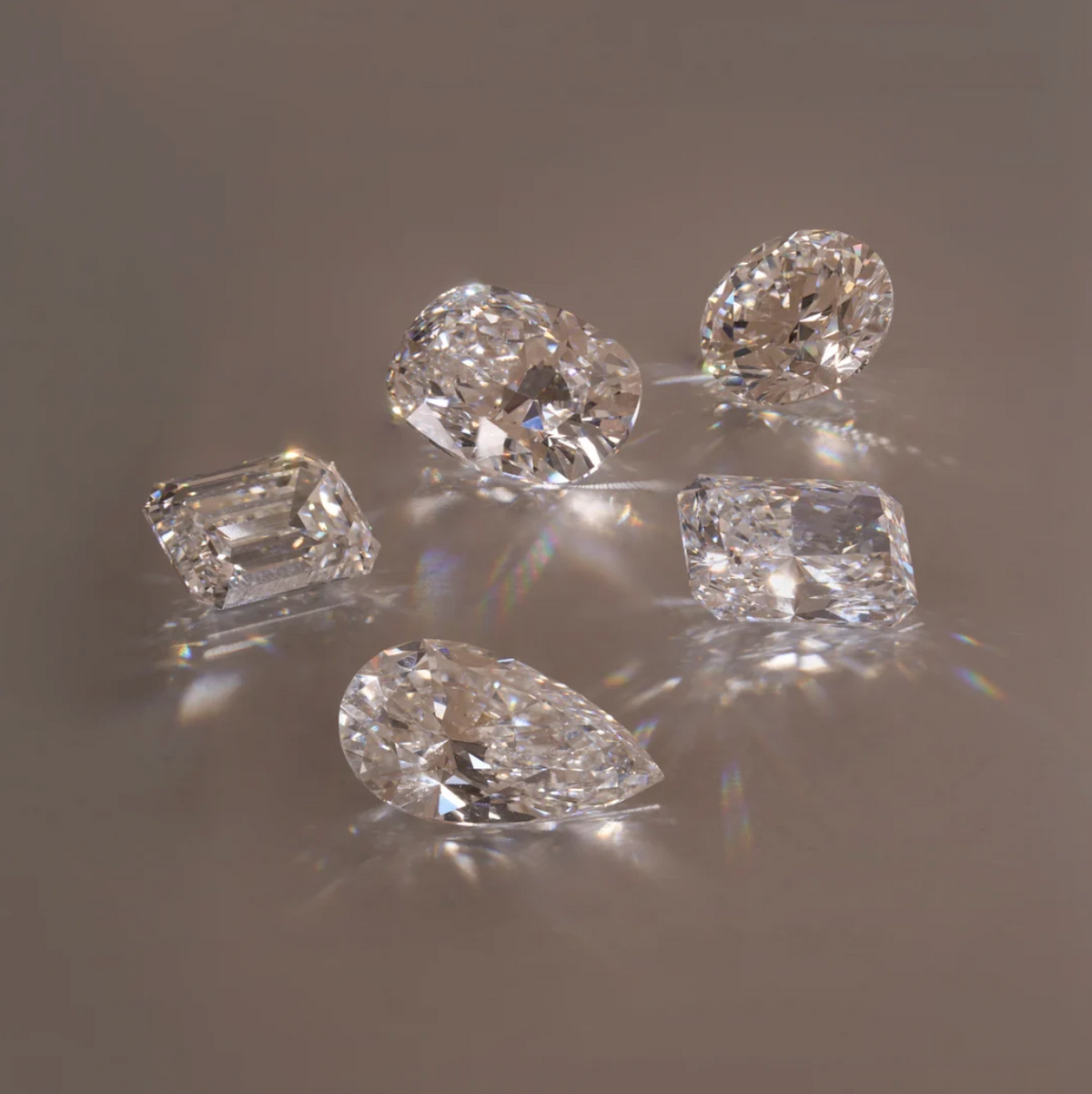
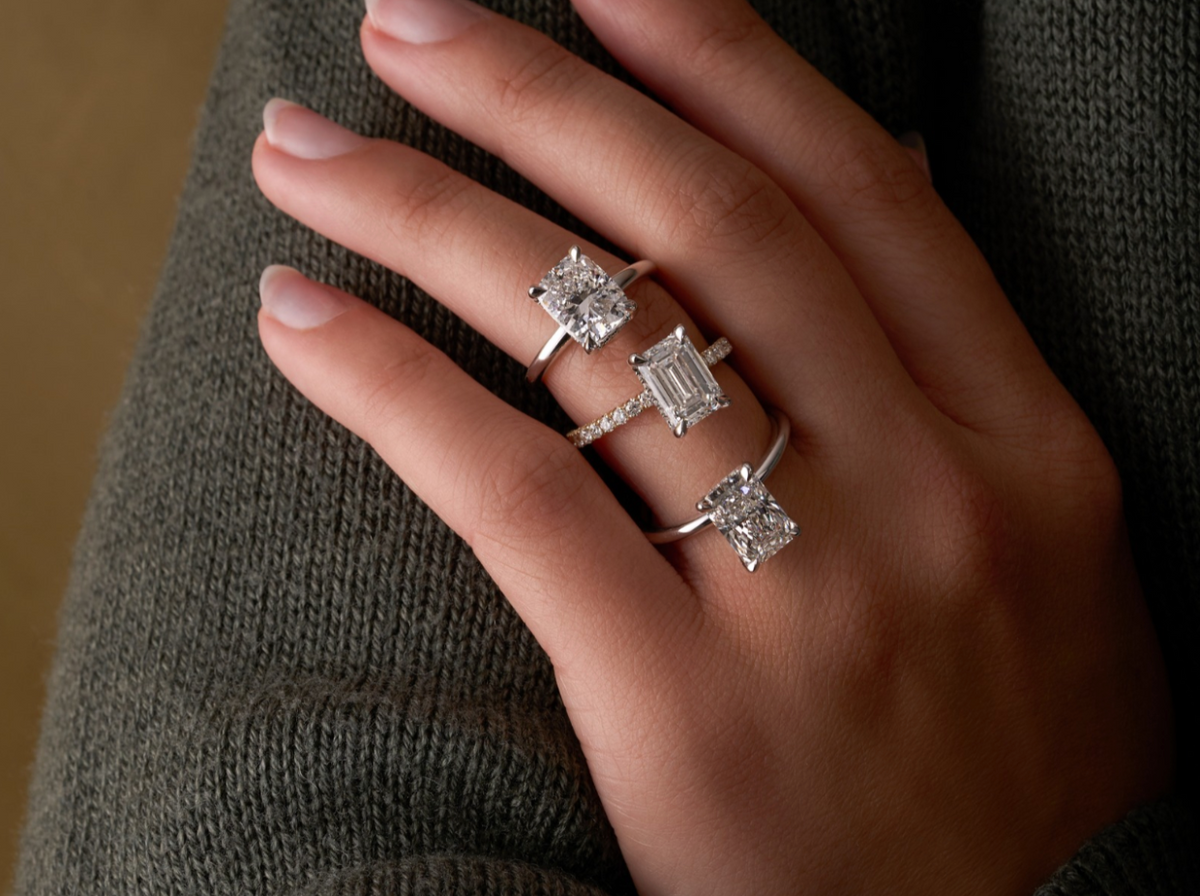
An emerald cut and a radiant can share a rectangular outline. The emerald cut’s long, parallel facets give you an open view into the stone. A radiant breaks up that view with smaller reflections that can make an inclusion harder to pick out. The Happy Jewelers diamond shape guide compares the two cutting styles.
Ovals, pears, and marquises can show a dark band across the middle called a bow tie. It forms when certain facets reflect the shadow of the viewer or camera. An SI1 can therefore show a stronger bow tie than an SI2.
A feather is a fracture that often looks white and wispy under magnification. If it reaches the girdle, the diamond’s narrow rim, that spot can be more vulnerable to chipping. On a pear or marquise, have the setter examine any feather near a pointed tip. Its depth and direction help determine where a prong can safely apply pressure.
Read the Clarity Report Alongside the Stone
When a GIA report includes a plotting diagram, match the symbols in the key to the top and bottom views. Red marks most inclusions, so a red symbol can represent a colorless crystal. The key generally lists characteristics in order of their importance to the grade. A laser drill hole, if present, comes first to disclose treatment. Read the comments beside the plot, too. Graders may describe a widespread feature there because drawing it in every affected area would crowd the diagram.
Some reports, including the GIA Diamond Dossier, list significant characteristics without a plot. Enter the report number in GIA Report Check to compare the listed clarity grade with the laboratory’s original record. If the number is also inscribed on the girdle, ask the jeweler to show it to you under magnification.
Judge What You Can See in Everyday Light
At the Jewelry Counter
Jewelers use “eye clean” when they can’t see inclusions without magnification. An SI1 is more likely to meet that description, although some SI2 diamonds do too. For a loose diamond, ask to try it in a temporary ring holder. Check it from your usual viewing distance and inspect the profile if you’re planning an open setting.
Move away from the display spotlights and try indirect window light. Spotlights bring out flashes of color. Softer light makes the pattern of bright and dark facets easier to judge. Hold the two stones side by side against the same background.
For stud earrings, judge the two diamonds as a pair. Round stones of equal weight can have different diameters if one carries more weight below the girdle. Compare their widths, then try them in a mirror to see whether one earring outshines the other.
When Shopping Online
A round diamond measuring 6.5 millimeters across looks ten times life-size if it spans 65 millimeters on your screen. Hold a ruler beside the display and shrink the photograph to the listed width before deciding how obvious a mark looks.
If changing the clarity option leaves you looking at the same stock image, request a video of the specific diamond reserved for your order. For a speck you’re unsure about, send the jeweler a screenshot with the spot circled. Ask them to check whether it lies inside the stone or is simply dust on the surface.
When Paying More for an SI1 Diamond Makes Sense
An SI1 generally costs more than an otherwise comparable SI2. To isolate the cost of the upgrade, compare natural diamonds graded by the same laboratory. Match shape, carat weight, color, and cut quality as closely as you can. Ask for the loose diamond prices if the rings have different settings.
Get any clarity treatments in writing before comparing quotes. Fracture filling makes a break less visible by introducing a glass-like material. Heat during a repair can damage that filler. If you choose a treated stone, keep the disclosure with the ring so a jeweler has that information before doing any work.
For a finished ring, check which diamond the grade describes. Our 1.51-carat natural pear diamond ring lists G color and SI2 clarity for the center. The smaller diamonds in its hidden halo carry a broader SI description and weigh about 0.06 carats combined. If another listing gives only the total weight of the ring’s diamonds, ask how much of that weight belongs to the center before comparing prices.
Find the Right Diamond for Your Budget
Choose between your finalists with the price tags covered. While SI1 diamonds are generally more likely to be eye-clean, a well-chosen SI2 diamond can offer a similar appearance at a lower price.
The best way to decide is to compare individual diamonds, review their grading reports, and consider how they look in everyday lighting. At Happy Jewelers, our team can help you explore your options and find a diamond that fits your preferences and budget.
Share:
How to Choose Hypoallergenic Jewelry for Sensitive Skin